
Gold finger PCBs
Card-edge contacts for removable boards. Define the mating geometry, wear requirements and inspection criteria together.
Explore requirements ↗Build a better gold finger PCB specification. Explore hard gold plating, edge beveling and connector geometry—then bring your requirements into one focused inquiry.
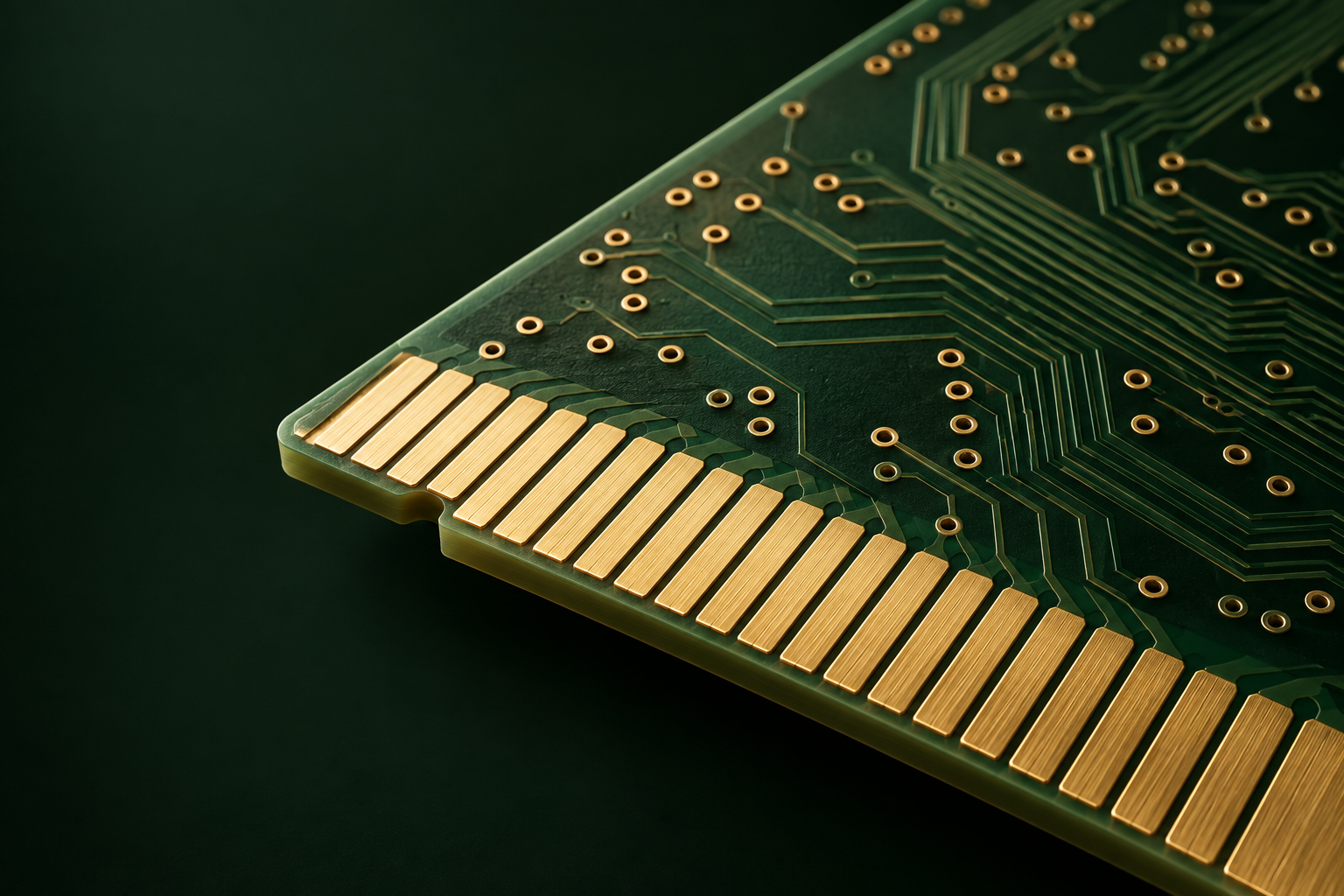
The connector, substrate, finish and manufacturing drawing must work together. Start with the board architecture your application actually needs.
Card-edge contacts for removable boards. Define the mating geometry, wear requirements and inspection criteria together.
Explore requirements ↗Separate the contact finish from the solderable surface. Understand hard gold, nickel underplate and selective processing.
Explore requirements ↗Plan the stackup, connector breakout and reference planes around a controlled mechanical interface.
Explore requirements ↗Coordinate fine-pitch routing and microvia choices with contact keepouts and plating access.
Explore requirements ↗Keep connector wear, stiffener geometry and dynamic bending requirements distinct in the design review.
Explore requirements ↗Resolve contact fit and finish details on the prototype, then carry approved requirements into the production package.
Explore requirements ↗Practical tools for gold thickness, material cost and design readiness. Every result shows its limits.
Convert micrometres and microinches without rounding away the specification.
1 µin = 0.0254 µm exactly. A unit conversion is not a plating recommendation. Specify the minimum, measurement locations and required finish independently.
See how contact area and thickness change the theoretical gold content. Enter your own material-price assumption.
Model: area × thickness × 0.00001932 g. Uses bulk pure-gold density of 19.32 g/cm³, uniform nominal thickness, and no process loss. Include both sides in total area. Excludes alloy composition, overplating, nickel, bath efficiency, tooling, PCB fabrication, beveling, testing, margin and freight. This is not a PCB price or a quote.
Use this checklist to identify missing inputs before requesting a review.
A completed checklist is not an automated Gerber check or a manufacturability approval.
Gold fingers are conductive pads at a PCB edge that mate with spring contacts in a connector. Their reliability depends on fit, contact force, surface condition, wear and the environment—not gold thickness alone.
Electrolytic hard gold is commonly chosen for repeated mating. ENIG is a different finish system; a board can use selective hard gold on the fingers and a solderable finish elsewhere.
Compare finish systems ↗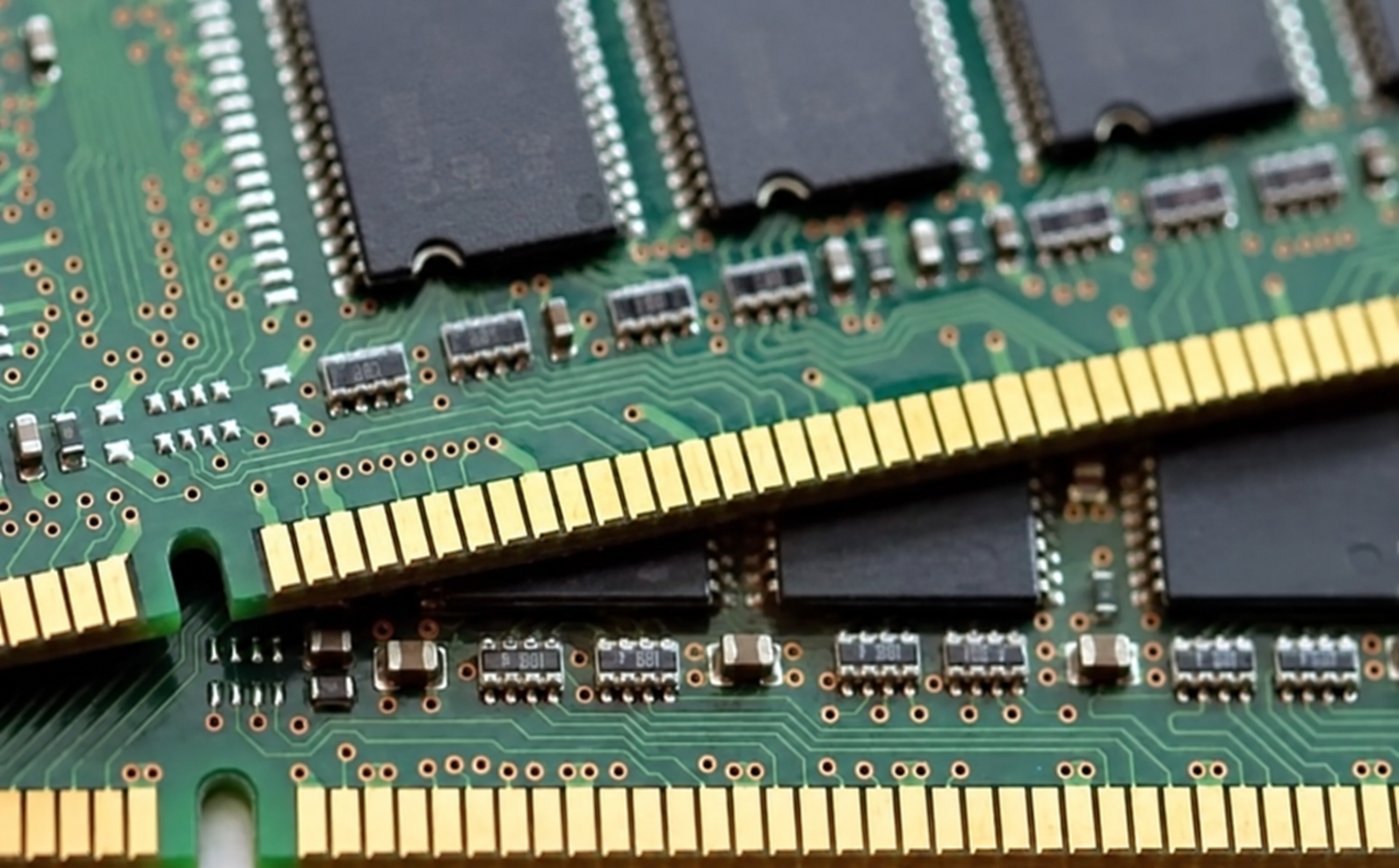
The plated contacts, key position and board edge work as one mechanical interface. Match their dimensions to the exact mating connector rather than estimating them from a photograph.
Use a dimensioned drawing to define usable contact length, board thickness, bevel geometry and the inspection requirements.
Explore the design guideIdentify the connector, intended environment, board size and expected mating use.
Include your stackup, gold finish, bevel drawing and dimensional tolerances.
Flag uncertain specifications before treating a design assumption as a requirement.
Submit quantities and drawings through the inquiry form. Files remain optional.
Convert units and distinguish nominal values from a guaranteed minimum.
Read the guide →Why the connector drawing, angle datum and remaining tip thickness matter together.
Explore bevel geometry →Understand preparation, nickel, gold deposition, profiling and final inspection.
Follow the process →Further reading: explore this gold finger PCB overview and a guide to PCB edge contacts alongside your connector manufacturer's drawing.
Design guidance is a starting point. The approved drawing and agreed acceptance requirements control the manufactured board.
See more questions →A PCB with gold-finished edge contacts designed to mate with a card-edge connector. The contact pattern and board edge form an electrical and mechanical interface.
Choose thickness using the connector requirements, duty cycle, environment and qualification evidence. There is no single value that guarantees a particular number of mating cycles. State the minimum thickness and measurement method in the drawing.
No. ENIG uses electroless nickel and immersion gold; hard gold is normally an electrolytic alloyed deposit selected for contact wear. They are not interchangeable just because both appear gold.
No. The connector drawing controls the bevel requirement. Define the angle reference and residual edge thickness rather than relying on a generic angle.
Yes. Files are optional. Describe the application, quantities and known dimensions, and identify the details that remain open.
Share your connector, board requirements and project stage. Add drawings when available, or start with a question.
Your email is used to respond to your inquiry. Review our privacy information before uploading files.